

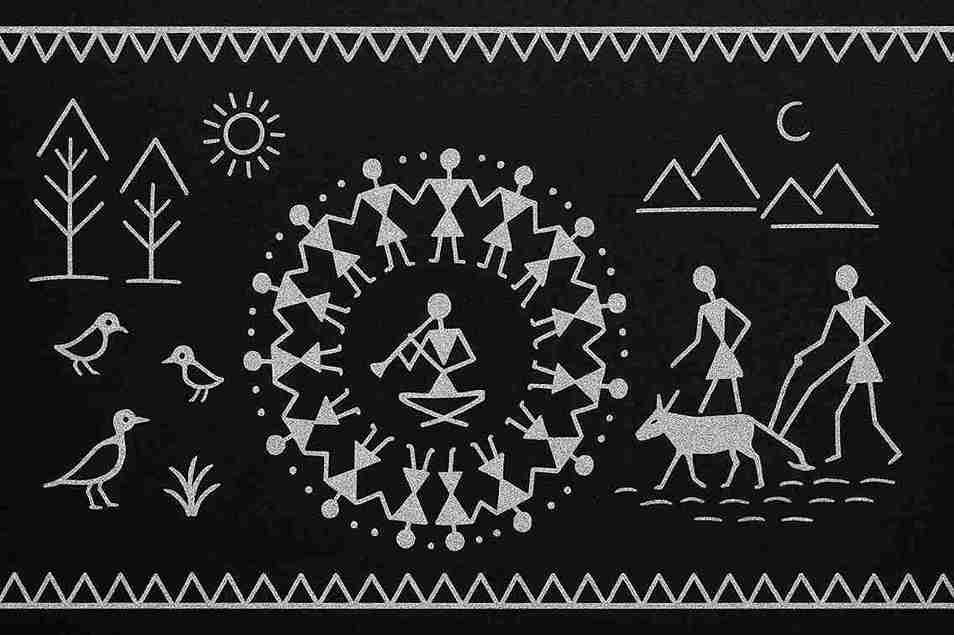
Warli art is one of the oldest forms of tribal painting from the Warli tribe in Maharashtra, India. This art form features a simple yet expressive style that captures the bond between humans and nature. What makes Warli art unique is its minimalistic approach. It uses basic shapes like circles, triangles, and lines, yet it holds deep cultural and spiritual meaning.
Thank you for reading this post, don't forget to subscribe!This blog will cover the history, symbolism, and simple ways to practice Warli art. We aim to make it friendly for beginners while respecting its traditional roots.
Origin and History of Warli Art
Warli art dates back to around 2500 BCE, making it one of the most ancient tribal art forms in India. The Warli tribe, located along the borders of Maharashtra and Gujarat, used this art to tell stories rather than for decoration. Traditionally, these paintings were made on the walls of mud huts using rice paste and bamboo sticks.
Unlike other Indian art forms that often depict gods and deities, Warli art highlights daily life, nature, animals, and social activities such as weddings and harvest celebrations. Its simplicity is what has given it global recognition today.
Symbolism in Warli Art
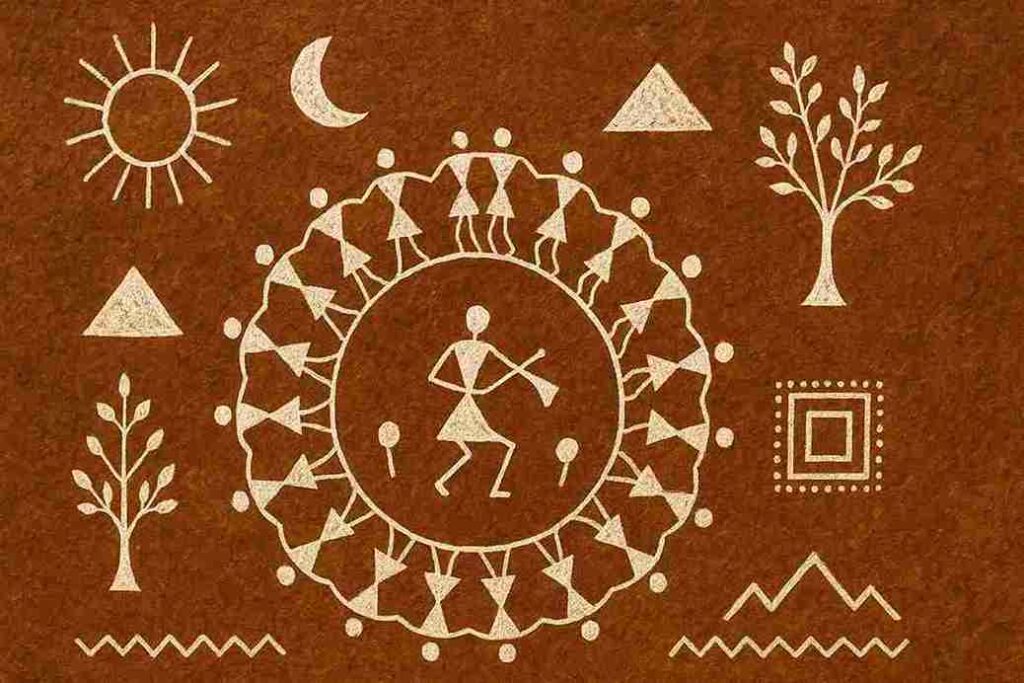
Warli paintings use geometric patterns with symbolic meanings:
Circle: Represents the sun and moon.
Triangle: Depicts mountains, trees, or balance.
Square: Symbolizes sacred spaces or rituals.
Stick Figures: Show human activities like farming, dancing, or hunting.
One of the most iconic Warli motifs is the tarpa dance, where villagers form a circle around a musician playing the tarpa, a wind instrument. This design symbolizes community, joy, and harmony with nature.
Why Warli Art is Still Relevant Today
Even though Warli art comes from tribal traditions, it has found a place in modern design and décor. From wall murals and canvas paintings to fashion prints and home accessories, Warli motifs provide an ethnic and eco-friendly touch.
Many contemporary artists and designers blend Warli art with modern materials like acrylic paints, digital illustrations, and textile printing. This ensures that this ancient art form remains alive and relevant.
How to Create Easy Warli Art at Home
Warli art may seem detailed, but the process is surprisingly simple. Here’s a step-by-step guide for beginners:
Choose Your Base: Traditionally, Warli art was done on mud walls. For modern practice, use craft paper, canvas, or a wall with a dark base (brown, black, or earthy tones).
Use Simple Tools: A thin paintbrush, bamboo stick, or even a ball-point pen works well for drawing.
Select the Theme: Start with nature (trees, birds, or sun), daily activities (farming, dancing, or cooking), or rituals (marriage, festivals).
Draw Basic Shapes: Combine triangles, circles, and lines to create human figures, animals, and objects.
Add Detailing: Create rhythmic patterns with border lines, dotted decorations, and repetitive motifs.
Use Natural Colors: Traditionally, white rice paste was used. Today, white acrylic paint or chalk markers work well.
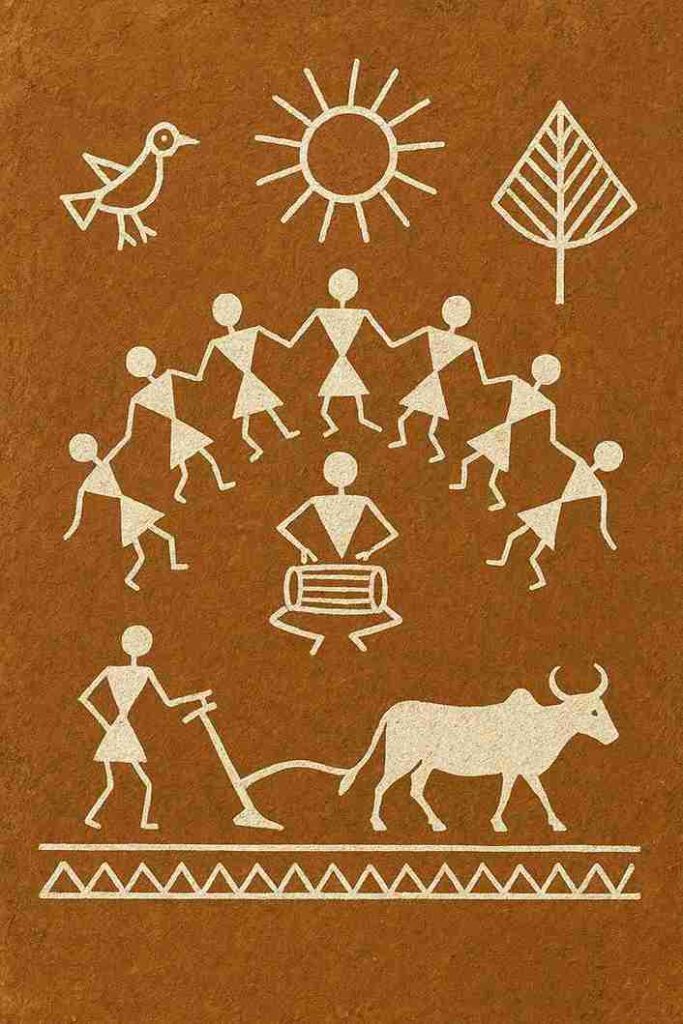
This minimalistic style makes it perfect for children, beginners, and hobby artists.
Tips to Make Warli Art More Engaging
Always keep the background earthy for authenticity.
Use symmetry and repetition for balance.
Add storytelling by linking figures into a scene, like villagers farming or celebrating.
Experiment on fabrics, pots, and wooden boards for a rustic décor look.
Final Thoughts
Warli art is more than just painting. It represents cultural heritage, simplicity of life, and harmony between humans and nature. By practicing and sharing this art, we preserve a tradition that has endured for centuries. Whether you’re an art enthusiast, a student, or someone who enjoys DIY projects, learning Warli art is both easy and rewarding.
So, grab your brushes and try your hand at creating your own Warli masterpiece today. It’s not just art but a journey into India’s timeless tribal culture.